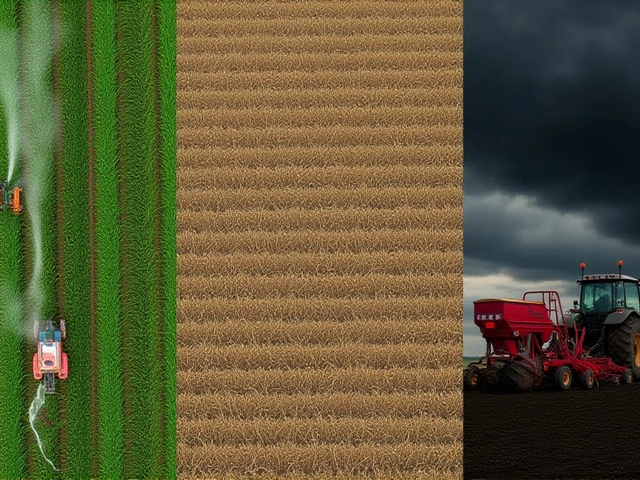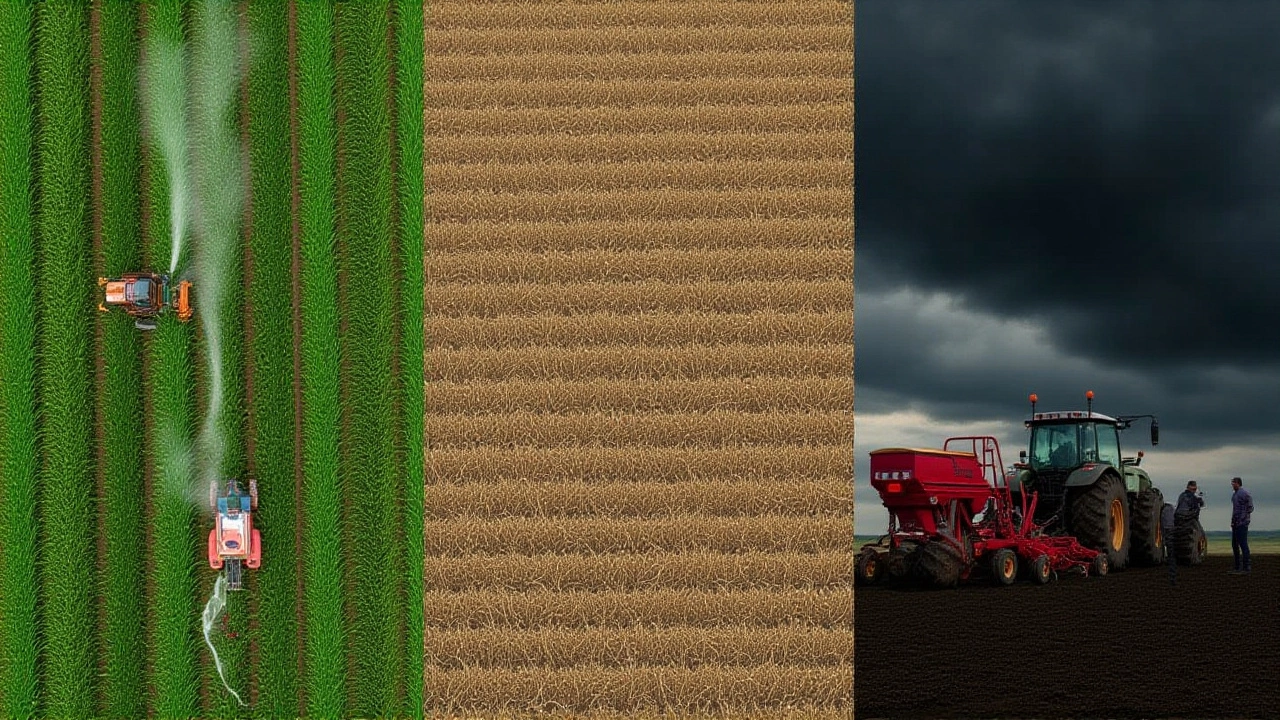
When JPMorgan released its latest Climate Intuition report on food security, the message was stark: your grocery bill is about to get heavier. The investment giant warns that a perfect storm of geopolitical tension and climate chaos is squeezing global fertilizer supplies, with ripple effects already hitting farmers from Brazil to India.
The issue isn't just theoretical. Over 36% of the world's urea—a critical nitrogenous fertilizer—is imported from the Persian Gulf. Now, production there is slowing due to the ongoing Iran conflict, and trade routes are constricting as the Strait of Hormuz faces potential shutdowns. Add in a brewing El Niño event shifting rainfall patterns, and you’ve got a recipe for higher food inflation.
Here’s the thing most people miss: timing is everything in agriculture. You can’t just spray fertilizer whenever it arrives. It needs to be applied at planting. If the trucks don’t show up by mid-April in the Northern Hemisphere, those crops won’t recover later in the season. As Dr. Sarah Kapnick, Global Head of Climate Advisory at JPMorgan notes, "The timing is unforgiving."
The Geopolitical Squeeze on Fertilizer
Let’s break down why the Middle East matters so much to your local farm stand. The Persian Gulf region dominates the global market for nitrogenous fertilizers because they have one massive advantage: cheap natural gas. Urea production is energy-intensive, and Gulf states have steady, low-cost feedstock. Since the escalation of tensions involving Iran, however, that stability has evaporated.
According to JPMorgan’s analysis, production of these materials has slowed significantly. But it’s not just about making less; it’s about moving what little is left. The Strait of Hormuz acts as a chokepoint for global energy and chemical trade. Any threat of a shutdown sends shockwaves through commodity markets. We’re seeing rapid supply reductions and immediate price hikes. This isn't a slow burn—it's a fire alarm.
The twist? Even if the geopolitical dust settles quickly, the agricultural damage might already be done. Restoring fertilizer production capacity takes time. Planting windows do not. Farmers operate on biological clocks dictated by seasons, not shipping schedules. A temporary shortage now can mean a permanent drop in yield for this harvest cycle.
El Niño: The Climate Multiplier
If supply chains weren’t enough, nature is throwing its own wrench into the works. Meteorologists are tracking a developing El Niño pattern. For those who remember the last major event, this means hotter temperatures and shifted rainfall belts across the tropics.
JPMorgan’s report highlights that El Niño doesn’t just bring weather extremes; it layers additional stress on an already fragile system. In tropical locations that rely heavily on Persian Gulf imports—think Southeast Asia and parts of South America—the combination of tighter fertilizer supplies and erratic weather creates a double jeopardy scenario. Lower output becomes almost inevitable when crops face both nutrient deficiency and heat stress.
This isn't just about bad harvests. It’s about inflation. When supply drops and demand stays constant (people still need to eat), prices rise. JPMorgan explicitly links these pressures to "added food inflation pressure," suggesting that consumers should brace for higher costs on staples like wheat, corn, and rice over the next 12 to 18 months.
Why Timing Matters More Than Volume
You might think, "Surely we can just buy more fertilizer later." Unfortunately, biology doesn’t work that way. Nitrogenous fertilizers are most effective when applied at specific growth stages, primarily during planting. Once crops are in the ground, applying them becomes far less efficient and often ineffective for boosting final yield.
This creates a unique vulnerability in our food system. Unlike manufactured goods, where inventory can be stored indefinitely, agricultural inputs have a narrow window of utility. A delay of three weeks can wipe out a farmer’s profit margin entirely. This rigidity makes the sector incredibly sensitive to supply chain shocks, even short-lived ones.
Dr. Kapnick emphasizes that restoring production after a disruption is slow. Chemical plants aren’t light switches; they take weeks to ramp up safely. Meanwhile, the sun keeps rising, and the planting season marches on regardless of whether the trucks are rolling.
Broader Implications for Global Trade
The impact extends beyond individual farms. Countries that import high volumes of Persian Gulf fertilizer are particularly exposed. Nations in Africa and Asia, which often lack domestic production capabilities, face the highest risk of food insecurity. The Food and Agriculture Organization (FAO) has long warned that climate change affects all four dimensions of food security: availability, accessibility, utilization, and stability. This crisis hits all four simultaneously.
We’re also seeing a shift in how investors view agricultural risk. JPMorgan’s Climate Intuition series, led by former NOAA Chief Scientist Dr. Kapnick, aims to help business leaders integrate these climate considerations into strategic decisions. The first report, "Navigating the New Climate Era," explored macroeconomic trends, but this latest edition drills down into the visceral reality of supply chain fragility.
Experts at the International Food Policy Research Institute (IFPRI) are already planning ahead. Their upcoming hybrid event in Washington, D.C., titled "The Impact of Global Change on Food Security in 2050," will assess these risks through the lens of food trade. The conversation is moving from reaction to preparation.
What Comes Next?
So, what should we watch? Keep an eye on two things: the status of the Strait of Hormuz and the intensity of the El Niño forecast. If the strait closes, expect immediate spikes in energy and fertilizer prices. If El Niño strengthens, prepare for reduced yields in key export regions like Brazil and Argentina.
Governments may need to step in with subsidies or strategic reserves to cushion the blow for smallholder farmers. Philanthropic organizations, as highlighted by the Atlantic Council, are positioning themselves as "strategic anchors" to sustain science and partnerships while political headwinds shift. But ultimately, the market will dictate the pace of recovery.
For now, the message is clear: the era of cheap, abundant food is under pressure. The convergence of war, weather, and logistics is creating a bottleneck that could redefine global food prices for years to come.
Frequently Asked Questions
How does the Iran conflict affect fertilizer prices?
The conflict disrupts production in the Persian Gulf, which supplies over 36% of global urea. Additionally, threats to the Strait of Hormuz hinder trade routes, causing rapid supply reductions and driving up commodity prices worldwide.
Why is timing critical for fertilizer application?
Nitrogenous fertilizers must be applied at planting to be effective. They cannot be efficiently used once crops are already in the ground. Delays mean missed planting windows, leading to lower yields regardless of later supply restoration.
What role does El Niño play in food security?
El Niño shifts rainfall and temperature patterns, bringing weather extremes that stress crops. Combined with fertilizer shortages, it increases the risk of lower agricultural output, particularly in tropical regions dependent on Gulf imports.
Which countries are most vulnerable to these disruptions?
Tropical locations with high dependence on Persian Gulf fertilizer imports are most at risk. This includes many nations in Southeast Asia, Africa, and parts of South America, where local production capacity is limited.
Who leads JPMorgan’s Climate Intuition series?
The series is led by Dr. Sarah Kapnick, former NOAA Chief Scientist and JPMorgan’s Global Head of Climate Advisory. She combines scientific expertise with financial insights to guide investment leaders on climate-related risks.